
Semantic mapping refers to the process of constructing a representation of the environment that not only captures spatial information but also encodes the meaning of objects and regions within it. In this framework, elements of the environment are assigned semantic labels—for example, a robot may classify a region as traversable terrain, obstacle, or restricted area. This enables the robot to reason about its surroundings rather than simply reacting to raw sensor data. However, current approaches are often limited by their reliance on predefined datasets and static models. As a result, adapting to new environments or unseen conditions frequently requires retraining or redesigning the system. This limitation becomes particularly significant in complex scenarios where multiple factors—such as terrain type, environmental conditions, and task constraints—interact in non-trivial ways.
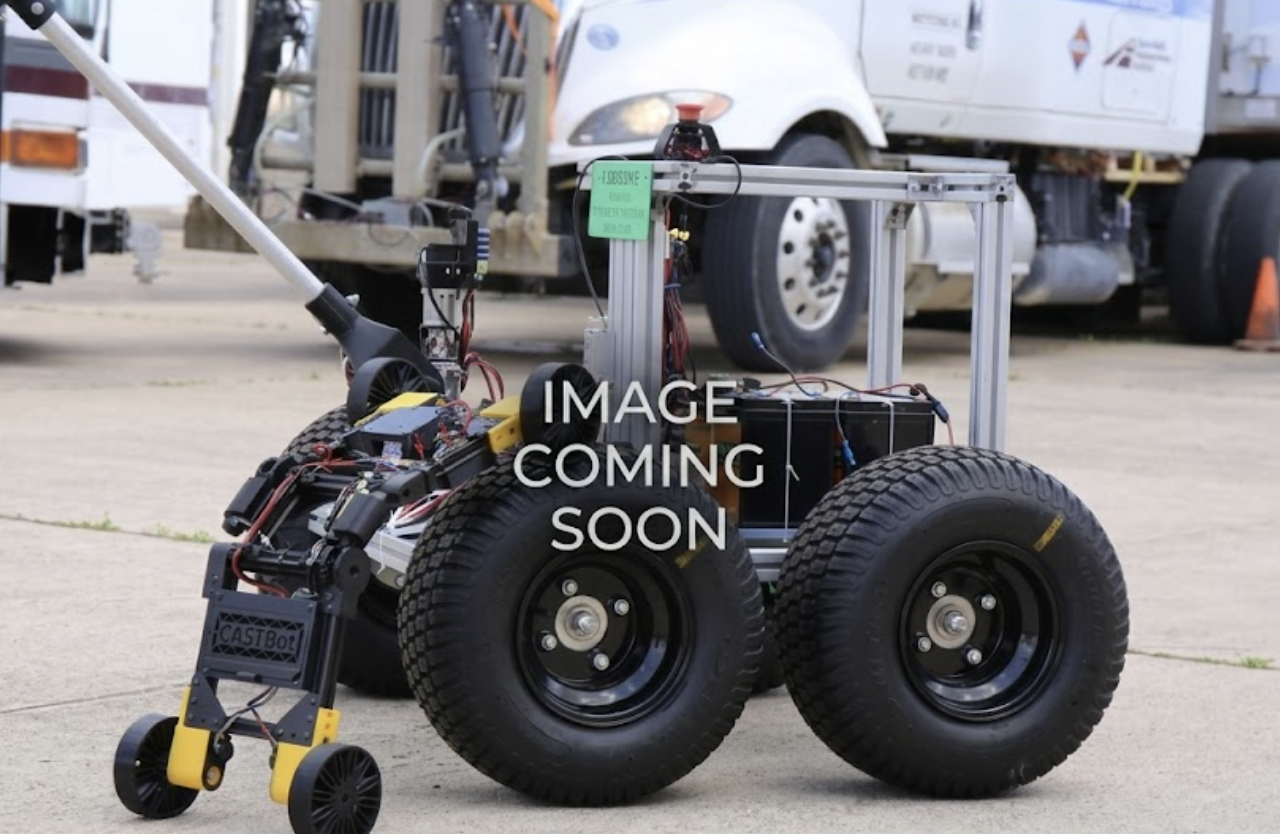
Semantic World Models for Reasoning and Decision-Making in Uncertain Environments
What is it?
Why is it needed?
Semantic mapping plays a critical role in enabling robots to transition from perception-driven behavior to knowledge-driven decision-making. By understanding what exists in the environment and how it affects actions, robots can make more informed and robust decisions.
This capability is particularly important in:
- Off-road navigation, where terrain properties directly influence mobility
- Multi-agent systems, where shared understanding of the environment improves coordination
- Dynamic environments, where conditions evolve over time
The integration of semantic understanding with uncertainty-aware planning has wide-ranging applications:
- Disaster Response:
Robots can interpret complex environments affected by events such as earthquakes or floods, enabling safer and more efficient search and rescue operations while reducing risk to human responders. - Search and Rescue:
Semantic awareness allows robots to identify critical features such as blocked paths, unstable terrain, or safe navigation zones, improving mission success rates. - Autonomous Reconnaissance:
In defense and surveillance scenarios, robots can operate autonomously in unknown environments, adapting their decisions based on evolving situational context.
What is CAST lab doing to improve it?
At CAST, we advance semantic mapping by using conventional artificial intelligence approaches with domain knowledge to model complex environments more effectively. In particular, we leverage description logics and ontology-based representations to encode relationships between entities in the environment, enabling robots to move beyond simple perception toward meaningful reasoning.By incorporating these semantic models, robots are able to make knowledge-driven inferences based on defined rules, rather than relying solely on pre-trained datasets. This allows systems to adapt more effectively to new and previously unseen environments without requiring complete retraining. Furthermore, we are working towards how semantic mapping can be tightly coupled with uncertainty-aware decision-making frameworks.
Select Publications & Links
- A. Bhamri and S. Gopalswamy, “Semantic world model for off-road environments for autonomous navigation and decision making,” in 2nd International Workshop on Working to- wards Ontology-based Standards for Robotics and Automation (WOSRA), 2023.
- A. Medellin, A. Bhamri, R. Langari, and S. Gopalswamy, “Real-time semantic segmentation using hyperspectral images for unstructured and unknown environments,” in 13th Workshop on Hyperspectral Imaging and Signal Processing: Evolution in Remote Sensing (WHISPERS), pp. 1–5, 2023.
- A. Bhamri, A.Medellin, D. Grabowsky, D. Mikulski, R. Lanagri,and S.Gopalswamy,“Unifying ontological framework for all-terrain datasets,” in 7th IEEE International Conference on Robotic Computing (IRC), pp. 292–296, 2023.